Showing of Results

Welcome Catamount First Years

08/15/2025
No Subjects
decorative-image

Welcome first year students! Checkout this list for helpful books and guides on how to be successful and healthy in college, find hikes and learn about the area, and grab some novels to read. Visit our table display in the Howe Library Lobby for even more books like these!


Cover Art How to become a successful college student by Dunlap, Scotty; Dudak, Brian 

This book is your one-stop shop for the academic tools and habits needed to make your transition from high school to college a resounding success! The shift from high school to college can be a challenge, with many students finding the skills that had previously worked so well no longer seem to be enough. How to Become a Successful College Student outlines the strategies you need to 'level up' your current processes in order to foster learning and retention of information in a new and rigorous environment, while also addressing topics that affect your experience outside of the classroom, such as financial literacy and career preparation. Learn how to pick a major, the benefits of getting out of your comfort zone, how and when to ask for help, and much more. Each chapter ends with a reflective activity designed to assist in creating an overall strategy personalized to fit YOUR specific higher education and career needs. This guide is a must-have resource for anyone who wants to maximize their higher education experience.


Cover Art College mental health 101 : a guide for students, parents, and professionals by Willard, Christopher 

The crisis in college mental health has intensified and the demand for counseling services is difficult for most college counseling offices to meet. Students often stop pursuing help because the waitlists are long and they become disillusioned. Finally there's help navigating the system. College Mental Health 101 is chock full of student and expert voices, straightforward tips on picking a school, getting the professional, medical, and social support you need, and understanding your diagnosis.


Cover Art How studying abroad changed my life by Obidoa, Chinekwu (Editor); Houry, Eimad (Editor) 

From fostering a deep appreciation for other cultures and human experiences to becoming more empathetic, self-assured, generous, open-minded, reflective, adaptable, and analytical, while gaining a deeper understanding of one's identity and culture, studying abroad has left an indelible mark on Mercer University students.


Cover Art AMC's best day hikes in Vermont : four-season guide to 60 of the best trails in the Green Mountain State by Roberts, Jennifer Lamphere 

From the Green Mountains that give the state its name to the shores of Lake Champlain to the southern woodlands, Vermont is made for hikers. AMC's Best Day Hikes in Vermont features 60 expertly curated hikes for all skill levels. Each entry includes a detailed map, plus summaries of time, distance, and difficulty level. The book's at-a-glance trip planner highlights the best hikes near public transportation, that are wheelchair accessible, for kids, for canine companions, and more. This fully revised guide includes classic hikes such as Camel's Hump, Mount Mansfield, and sections of the Long and Appalachian trails, along with new additions Raven Ridge, Killington Peak, Moose Bog, and more. Whether you're looking for an exploration of nature or to bag a 4,000-footer, this guide is indispensable.


Cover Art My mother's dream : the story of a first-generation college student by Henderson, George 

The primary audience for this book is first-generation college students. Whether they are in two-year or four-year colleges, I give the readers an example of the power of a parent's dream, the positive and negative outcomes of a student's hard work, the stuff caring teachers and supportive school administrators are made of, and the significance of resilience, tenacity, and self-growth. Hopefully, my story will give those who read this book a dose of what stick-to-itiveness means up close and personal.... My foremost message to first-generation and other-generation students is to ask for help when you are stumped, seize whatever opportunities to help you improve, and do your best work. Secondly, this book is written for teachers, school counselors, nurses, and other personnel who help students during their educational journeys. Their assistance can be helpful or hurtful to whatever generation of students they are helping. What they do to students and how they do it matters hugely. Thirdly, this book is written for professional helpers who are not school-related but who want to become better helpers in other careers. Lastly, this book is written for people who are not professional helpers but are curious about the travails and struggles of poverty-stricken people like me and my family.... I have had a long, tedious journey from illiteracy to literacy, from segregation to desegregation, from poverty to affluence, and from disliking people who came from cultures different from my own to loving them. Nonviolent theories and behavior were like a river flowing through my life, slowly during my childhood and adolescence and rapidly after I enrolled in college. The Civil Rights Movement is the name of that river. It was the foremost foundation upon which I built my philosophy of helping other people. So, of course, the Reverend Dr. Martin Luther King, Jr. was my hero, role model, and guide. His words and strategies of change are generously sprinkled throughout the later chapters of this book.
 

Cover Art The one-pan college cookbook : 80 easy recipes for quick, good food by Hong, MJ 

Cooking can be a great way to explore new foods, develop new kitchen skills, and save yourself time and money. With The One-Pan College Cookbook , any college student can make nutritious, easy one-pan recipes--no prerequisite coursework required. These dorm-friendly dishes and techniques also provide handy knife, seasoning, and organization lessons every student will use well beyond undergrad.


Cover Art Catalina : a novel by Cornejo Villavicencio, Karla 

Catalina is trying to work out her own life as she leaves her undocumented family behind to enter Harvard. Suffering from bouts of PTSD, she struggles to connect to her new world just as she struggled to make sense of her old one. She infiltrates the subcultures of elite undergrads-internships and college newspapers, parties and secret societies-and observes them like an anthropologist, but then falls in love, or something like love, with a fellow student, an actual anthropology scholar who wants to teach her about the Andean world she was born in but never knew. They are drawn to each other by the strange attraction of exocticized fascination-she, a real live Latin American, becomes a subject of academic interest; he, in turns, draws her fascination as a white legacy admit born into the strange world she now navigates. Catalina is uncertain: should she let herself become what he wants her to be and take up residence in his secure and privileged world? Or should she return to the life she's known, with all its thorny precarity? Who is she anyway?


Cover Art The college student's guide to mental health : essential wellness strategies for flourishing in college by Nosanow, Mia 

This comprehensive guidebook covers every factor that can influence the mental health of college students, providing clear guidance for maintaining a healthy and successful lifestyle as students navigate their new life away from home.


Cover Art New England's roadside ecology : explore 30 of the region's unique natural areas by Wessels, Tom 

New England's Roadside Ecology guides you through 30 spectacular natural sites, all within an easy walk from the road. The sites include the forests, wetlands, alpines, dunes, and geologic ecosystems that make up New England. Author Tom Wessels is the perfect guide. Each entry starts with the brief description of the hike's level of difficulty--all are gentle to moderate and cover no more than two miles. Entries also include turn-by-turn directions and clear descriptions of the flora, fauna, and fungi you are likely to encounter along the way. New England's Roadside Ecology is a must-have guide for outdoor enthusiasts, hikers, and tourists in Connecticut, Maine, Massachusetts, New Hampshire, Rhode Island, and Vermont.


Cover Art Run fast. Cook fast. Eat slow : quick-fix recipes for hangry athletes by Flanagan, Shalane 

In their second cookbook, Olympian Shalane Flanagan and chef Elyse Kopecky present recipes that are fast and easy without sacrificing flavor. Quickly fix pre-run snacks, post-run recovery breakfasts, on-the-go lunches, and 30-minutes-or-less dinner recipes. Every recipe--from Shalane and Elyse's signature Superhero muffins to energizing smoothies, grain salads, veggie-loaded power bowls, homemade pizza, and race day bars--provides fuel and nutrition without sacrificing taste or time.


Cover Art Letters to students : what it means to be a college graduate by Bogner, Drew 

Letters to Students discusses the meaning of higher education for the individual and offers advice on navigating the college experience, life, work, the meaning of success, the role of creativity and leadership.


Cover Art The college student's research companion : finding, evaluating, and citing the resources you need to succeed by Quaratiello, Arlene Rodda 

The newest edition of this valuable tool offers students easy-to-understand guidance on going beyond Google to find, evaluate, and use quality informational sources that will enable them to write better research papers.


Cover Art Outsmart your brain : why learning is hard and how you can make it easy by Willingham, Daniel T. 

Written by a cognitive psychologist who has spent decades studying how we learn, OUTSMART YOUR BRAIN is the definitive guide to help students master the skills of understanding material and retaining information. In clear, accessible prose, Dan Willingham lays out the techniques necessary for students at any stage to succeed and thrive when learning, studying, and taking exams. When studying, the tendency is to focus on the mental tasks that we control most easily, and which create a sense of familiarity, like rereading and highlighting, But, as explained in OUTSMART YOUR BRAIN, familiarity is not the same thing as retention or comprehension. Real learning comes from practices we may not be as likely to implement, like self-testing. Each chapter in the book is devoted to one process that contributes to learning, but which such as avoiding procrastination or understanding what you're trying to learn. The book offer an analysis of what makes it difficult and then offers specific strategies which work. Each chapter ends with a "For Teachers and Trainers" section. OUTSMART YOUR BRAIN is grounded in scientific findings but devoted to practical advice which make a difference to student test scores and grades. Giving readers peek under the hood at their own brains will help them understand which learning strategies work and why.


Cover Art Hidden history of Burlington, Vermont by Fay, Glenn 

Sitting on a hillside overlooking a spectacular lake and mountains, Burlington was destined to attract greatness, although much of its history has remained hidden. It was the territory of the Alnôbak, who lived in concert with nature for thousands of years, and later the swashbuckling Green Mountain Boy Ethan Allen and his kin. Self-made tycoon Lawrence Barnes helped make the city the third-largest lumber shipping port in the country. The resilient Fanny Penniman created the first herbarium, and her daughter inspired a nineteenth-century hospital. Bootlegger Cyrus Dean was convicted of murder and publicly executed in the hill section. Irish, French Canadian, Jewish and Italian neighborhoods all combined to give a unique character to the city. Join author and historian Glenn Fay as he reveals stories and images of Burlington's forgotten past.


Cover Art The material : a novel by Bordas, Camille 

Can comedy be taught? Someone, at some point, seemed to think so. The Chicago Stand-Up program has enrolled young comedians for nearly a decade. Its teachers and students all know how bits work-in theory, at least. They know that there's a line between sharp and cruel, that sad becomes funny at the right angle, that the worst is the best, the truth is the worst, and any moment of your life that isn't a punchline will either get you to a punchline or force you to be one. They're all afraid to be one. Artie may be too handsome for standup, Olivia too reluctant to examine her own life, and Phil too afraid to cause harm. Kruger may be too vanilla to command his students' respect, Ashbee too detached. And then we have Dorothy-the only woman on the program's faculty-who though preparing to launch a comeback tour can't tell whether she's too abiding, too ambitious, or too ambivalent. Whether a visiting professor-the high-profile, controversy-steeped comedian, Manny Reinhardt-will do more to help or harm their cause remains to be seen. But he's on his way. He'll be arriving sooner than anyone thinks.


Cover Art The greatest college health guide you never knew you needed : how to manage food, booze, stress, sex, sleep, and exercise on campus by Henry, Jill 

The coach's guide to beating the Freshman Fifteen, Sophomore Slump, crippling anxiety, and your worst hangover! Learn to take care of yourself, and de-stress throughout your undergrad years and beyond. Every fall, around two million young adults crash into college fired up for the best four years of their lives, ready to experience campus life, take classes about things they're interested in, and meet people from all over the world. Most students, however, are better prepared to pick their major or talk to strangers than they are to take care of themselves in the college setting. College students today are more depressed, anxious, and stressed than previous waves of students; they're also more sedentary, not really exercising, and living in a meal-plan limbo supplemented with ramen and coffee. In this comprehensive field guild, high school coaches Jill and Dave Henry break down the facts and deliver doable, no-BS strategies for managing physical and mental health on campus. In addition to helpful, interactive graphics, the coaches share their relatable true stories-ranging from the ridiculous to the serious-to discuss the five biggest health obstacles students face in college. On top of research-backed tips, The Greatest College Health Guide You Never Knew You Needed also features raw and personal advice from current students on college campuses across the country. While simply figuring out what to eat and how to exercise can be completely overwhelming, this guide goes beyond a basic crash course on how to be healthy. Jill and Dave cover everything from crucial time-management skills to the complex sensitivity of self-doubt, sexual assault, and depression with humor, humility, and heart. The Greatest Health Guide You Never Knew You Needed is a complete road map for how to take care of your mind and body that will not only set students up to crush the next four years, but will also provide a foundation they can carry with them for the rest of their lives.
 

Cover Art Come and get it : a novel by Reid, Kiley 

It's 2017 at the University of Arkansas. Millie Cousins, a senior resident assistant, wants to graduate, get a job, and buy a house. So when Agatha Paul, a visiting professor and writer, offers Millie an easy yet unusual opportunity, she jumps at the chance. But Millie's starry-eyed hustle becomes jeopardized by odd new friends, vengeful dorm pranks, and illicit intrigue.


The Student Wellbeing Toolkit puts wellbeing at the centre of your journey into university and beyond. By encouraging self-efficacy and a focus on the things you can control, it provides clear guidance to enhance wellbeing and opportunities for self-reflection that help develop self-awareness and prosocial skills for life. Offering an accessible toolkit of strategies, activities and tips this fantastic, accessible resource considerers wellbeing within six main areas: - physical wellbeing - socio-emotional wellbeing - intellectual wellbeing - environmental wellbeing - occupational wellbeing - financial wellbeing. Drawing on research evidenced theories around positive psychology, theories of learning, motivation, and self-development, the book explores what, how, and why these areas are key to our wellbeing and the rationale for taking them into account to enable you to flourish and thrive at university.


Cover Art Making the most of study abroad : a guide to a top-notch experience by D'Amico, Melanie L. 

This book helps you make the most of study abroad or an extended stay in another country. We discuss culture, making connections, language, academics, and careers, along with the practical elements like getting a visa or figuring out what to pack. We provide advice about all stages of study abroad, from the pre-departure preparation to the return home, in order to help you have an outstanding stay abroad.


No Tags

Similar Posts

View All Posts
featured-image-170781

November 3 - 8 is First-Gen Week. Check out these new books in our collection regarding the experience of being the first in a family to attend college. Visit the Howe Library Lobby display to find these books, plus books authored by first-gen UVM faculty and staff - including our President, Dr. Marlene Tromp! 


Cover Art Undocumented : a Dominican boy's odyssey from a homeless shelter to the Ivy League by Padilla Peralta, Dan-el 

Throughout his youth, Dan-el navigated ... two worlds: the rough streets of East Harlem, where he lived with his brother and his mother and tried to make friends, and the ultra-elite halls of a Manhattan private school, where he could immerse himself in a world of books and where he soon rose to the top of his class. From Collegiate, Dan-el went to Princeton, where he thrived, and where he made the momentous decision to come out as an undocumented student in a Wall Street Journal profile a few months before he gave the salutatorian's traditional address in Latin at his commencement.


Cover Art Every student has a story : personal narratives from first-generation college students 

This book is a compilation of essays by TRIO Student Support Services Students at Indiana University Purdue University Fort Wayne (IPFW). Inspired by Aquinas College's student publishing project, IPFW TRIO Student Support Services coordinated a semester long opportunity for TRIO students in the spring of 2016. Students were asked to participate in writing circles where they could tell their stories, hear other students' stories, and get feedback about how to write compelling essays about their life experiences.


Cover Art First gen : a memoir by Campoverdi, Alejandra 

Alejandra Campoverdi has been a child on welfare, a White House aide to President Obama, a Harvard graduate, a gang member's girlfriend, and a candidate for U.S. Congress. She's ridden on Air Force One and in G-rides. She's been featured in 'Maxim' magazine and had a double mastectomy. With candor and heart, Alejandra retraces her trajectory as a Mexican American woman raised by an immigrant single mother in Los Angeles. Foregoing the tidy bullet points of her resume and instead shining a light on the spaces between them, what emerges is a powerful testimony that shatters the one-dimensional glossy narrative we are often sold of what it takes to achieve the American Dream.


Cover Art Smart girl : a first-gen origin story by Miles, La'Tonya Rease 

Smart Girl: A First-Gen Origin Story is a memoir that redefines first-gen and Black student narratives that highlights mass media, pop culture, and sports as key to shaping identity, resilience, and community. In her memoir, Dr. Rease Miles traces the (sound)tracks of her life as she journeys through myriad K-12 public schools and several college experiences toward a PhD and beyond, battling self-doubt, racism, "imposter syndrome," and "survivor's guilt" to transform the higher education landscape for herself, her family, and community. Smart Girl shifts the focus of first-gen memoirs from solely academic grit to exploring the everyday cultural forces that shape identity and resilience.


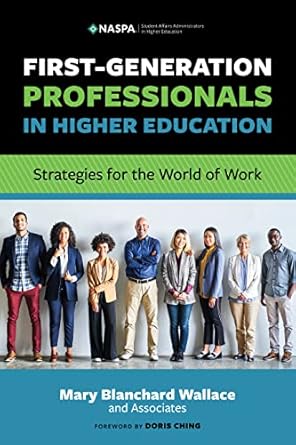
Cover Art First-Generation Professionals in Higher Education by Wallace, Mary Blanchard 

First-generation Professionals in Higher Education: Strategies for the World of Work explores complexities related to the transition from college/professional school to the work world of higher education, as well as the advancement from mid- to senior-level leadership, and how first-generation professionals navigate these transitions. Framing their chapters in the asset-based lens of cultural capital, the authors approach topics of navigating the field of higher education as first-generation professionals through personal experience as well as evidence-based approaches and strategies. Organized in three sections-Professional Identity, Purposeful Interaction, and Career Path--the book examines concepts such as imposter syndrome, politics, financial literacy, resilience, networking, mentoring, career progression, and more. Each chapter includes activities, exercises, and questions for reflection, offering readers an opportunity to discern strategies for their own professional development.
 

Cover Art The hidden curriculum : first generation students at legacy universities by Gable, Rachel 

A revealing look at the experiences of first generation students on elite campuses and the hidden curriculum they must master in order to succeed College has long been viewed as an opportunity for advancement and mobility for talented students regardless of background. Yet for first generation students, elite universities can often seem like bastions of privilege, with unspoken academic norms and social rules. The Hidden Curriculum draws on more than one hundred in-depth interviews with students at Harvard and Georgetown to offer vital lessons about the challenges of being the first in the family to go to college, while also providing invaluable insights into the hurdles that all undergraduates face. As Rachel Gable follows two cohorts of first generation students and their continuing generation peers, she discovers surprising similarities as well as striking differences in their college experiences. She reveals how the hidden curriculum at legacy universities often catches first generation students off guard, and poignantly describes the disorienting encounters on campus that confound them and threaten to derail their success. Gable shows how first-gens are as varied as any other demographic group, and urges universities to make the most of the diverse perspectives and insights these talented students have to offer. The Hidden Curriculum gives essential guidance on the critical questions that university leaders need to consider as they strive to support first generation students on campus, and demonstrates how universities can balance historical legacies and elite status with practices and policies that are equitable and inclusive for all students.
 

Cover Art 33 simple strategies for faculty : a week-by-week resource for teaching first-year and first-generation students by Nunn, Lisa M. 

33 Simple Strategies is designed to offer university faculty simple and straightforward ways they can interact with students both during class time and during office hours that will help mediate some of first-year students' most stressful challenges. The suggested strategies require just 5-15 minutes a week. Every suggestion is rooted in first-year students' own voices, gathered during research at one four-year private and one four-year public institution. The strategies pay particular attention to the additional needs and challenges that low-income, ethno-racial minority, and first-generation college students face in the transition to university academics and college life more generally. Including strategies like Introduce yourself as a person to your students rather than list your professional qualifications, Have students fill out a time log over the course of a week so that you can talk about time management, Help students find study partners among their classmates, All the suggestions came directly from students themselves in one-on-one interviews, where the students described their experiences with professors in and out of the classroom, and articulated things that professors do that they found helpful to their learning, their confidence, and their success, and vice versa as well. For any professor just starting out, or for someone who wants to incorporate techniques to reach first year or first generation students, these short, simple suggestions will prove easy to implement, and will increase student success in any class.
 

Cover Art College belonging : how first-year and first-generation students navigate campus life by Nunn, Lisa M. 

College Belonging reveals how colleges' and universities' efforts to foster a sense of belonging in their students are misguided. Colleges bombard new students with the message to "get out there!" and "find your place" by joining student organizations, sports teams, clubs and the like. Nunn shows that this reflects a flawed understanding of what belonging is and how it works. Drawing on the sociological theories of Emile Durkheim, College Belonging shows that belonging is something that members of a community offer to each other. It is something that must be given, like a gift. Individuals cannot simply walk up to a group or community and demand belonging. That's not how it works. The group must extend a sense of belonging to each and every member. It happens by making a person feel welcome, to feel that their presence matters to the group, that they would be missed if they were gone. This critical insight helps us understand why colleges' push for students simply to "get out there!" does not always work.
 

Cover Art College aspirations and access in working-class rural communities : the mixed signals, challenges, and new language first-generation students encounter by Ardoin, Sonja 

College Aspirations and Access in Working-Class Rural Communities: The Mixed Signals, Challenges, and New Language First-Generation Students Encounter explores how a working-class, rural environment influences rural students' opportunities to pursue higher education and engage in the college choice process. Based on a case study with accounts from rural high school students and counselors, this book examines how these communities perceive higher education and what challenges arise for both rural students and counselors. This book addresses how college knowledge and university jargon illustrate the gap between rural cultural capital and higher education cultural capital. Insights about approaches to reduce barriers created by college knowledge and university jargon are shared and strategies for offering rural students pathways to learn academic language and navigate higher education are presented for both secondary and higher education institutions.

Cover Art Know that you are worthy : experiences from first-generation college graduates 

In Know That You Are Worthy: Experiences from First Generation College Graduates, 31 alumni who were the first in their family to obtain a college degree share their experiences in college. These stories illuminate how the struggles of first generation students are primarily due to a combination of multiple social inequities that are ignored, reinforced, and perpetuated by exclusive college systems. These authors speak directly to current and future first generation students, offering tips and advice for success, along with powerful words of encouragement in their emotionally rich narratives. College faculty and staff are challenged to shift their perspectives from viewing these students from a deficit lens or attempting to make them more like continuing-generation students, to instead having deeply honest confrontations with the pedagogies and structures of college, which are frequently so ingrained that they are invisible, and that cater to continuing-generation students, who are often predominantly white, middle- and upper-class. Colleges can create a more equitable system in which universities are enriched by the wisdom, experiences, and talents of first generation students while promoting a generative culture for all students.
No Subjects
featured-image-159392

June is Pride month! UVM Libraries is celebrating with these new books in our collection featuring LGBTQIA+ stories and histories. Check-out our physical display in the Howe Library Lobby for even more books like these!


Cover ArtQueer as folklore : the hidden queer history of myths and monsters by Coward, Sacha

Leaving no headstone unturned, Sacha Coward will take you on a wild ride through the night from ancient Greece to the main stage of RuPaul's Drag Race, visiting cross-dressing pirates, radical fairies and the graves of the 'queerly departed' along the way. Queer communities have often sought refuge in the shadows, found kinship in the in-between and created safe spaces in underworlds; but these forgotten narratives tell stories of remarkable resilience that deserve to be heard. Join any Pride march and you are likely to see a glorious display of papier-ḿcȟ unicorn heads trailing sequins, drag queens wearing mermaid tails and more fairy wings than you can shake a trident at. But these are not just accessories: they are queer symbols with historic roots. To truly understand who queer people are today, we must confront the twisted tales of the past and Queer as Folklore is a celebration of queer history like you've never seen it before.


Cover ArtHow we make each other : trans life at the edge of the university by Zurn, Perry

Perry Zurn's How We Make Each Other reframes the common narrative of trans life in the university, centering not on trans-inclusive policies, but on the community building that takes places at the edges of campus life. Building on extensive archival and interview work in and around the Five Colleges of Massachusetts's Pioneer Valley-Amherst, Hampshire, Mount Holyoke, Smith, and UMass-Zurn examines the ways in which quotidian trans relationships produce moments collective resistance, such as protests, as well as tangible advancements in inclusivity, such as gender neutral bathroom signs.


Cover ArtThe fox spirit, the stone maiden, and other transgender histories from late imperial China by Sommer, Matthew Harvey

In Transgender in Imperial China, Matthew Sommer offers a close reading of a series of remarkable, well-documented court cases from the 18th and 19th century Qing dynasty legal archives that deal with sex and gender difference. The book explores practices in their specific historical context and avoids imposing trans-historical identities on people in the past, understanding, in the vein of Susan Stryker's work, that "transgender people" are those who "move away from" the gender assigned at birth and "cross over" the gender boundaries imposed by their society, without assuming any specific motivation or destination for that movement. Sommer details the experience of individuals assigned male at birth who were living as women (and were punished very harshly for the crime of "masquerading in women's attire"), but also includes under the sign "transgender" a range of personae not usually considered in this context, such as cross-dressing "boy actresses" of the opera and those who "left the family" by becoming Buddhist or Daoist clergy or eunuchs in imperial service and renouncing normative gender roles based on marriage and procreation. These cases explore a range of themes in Chinese law, society, and culture, and illuminate how many forms of gender transgression were sanctioned by law in Qing society. In considering all of these scenarios together, Sommer's book unpacks the full story of how sex and gender were understood in the Qing era.
 

Cover ArtQueer spaces an atlas of LGBTQIA+ places and stories by Furman, Adam Nathaniel (Editor); Mardell, Joshua (Editor)

An independent bookshop in Glasgow. An ice cream parlour in Havana, where strawberry is the queerest choice. A cathedral in ruins in Managua, occupied by the underground LGBTQIA+ community. Queer people have always found ways to exist and be together, and there will always be a need for queer spaces. In this lavishly illustrated volume, Adam Nathaniel Furman and Joshua Mardell have gathered together a community of contributors to share stories of spaces that range from the educational to the institutional to the re-appropriated, and many more besides. With historic, contemporary and speculative examples from around the world, Queer Spaces recognises LGBTQIA+ life past and present as strong, vibrant, vigorous, and worthy of its own place in history. Looking forward, it suggests visions of what form these spaces may take in the future to continue uplifting queer lives. Featured spaces include: Black Lesbian and Gay Centre, London Category Is Books, Glasgow Christopher Street, New York Coppelia, Havana New Sazae, Tokyo ONE Institute for Homophile Studies, Los Angeles Pop-Up spaces, Dhaka Queer House Party, Online Santiago Apóstol Cathedral, Managua Trans Memory Archive, Buenos Aires Victorian Pride Centre, Melbourne

Cover ArtQueer style : including a chapter on trans* and fluid style by Geczy, Adam

Queer Style: Revised and Updated Edition by Adam Geczy and Vicki Karaminas explores the evolution of queer fashion and its cultural significance. The book examines historical and contemporary styles within the LGBTQ+ community, including lesbian, gay, and transgender fashion. It discusses the impact of media, film, and popular culture on queer visibility and expression. The authors aim to highlight the diversity and fluidity of queer styles, while addressing issues of identity and representation. This updated edition includes new chapters on trans* and fluid fashion, making it relevant for scholars, students, and those interested in fashion studies and queer culture.


Cover ArtThe deep dark by Ostertag, Molly Knox

High school senior Magdalena Herrera already has adult responsibilities and a deadly secret hidden in the dark of the basement, one that drains her of energy and leaves her bleeding--until the return of her childhood friend, Nessa, forces her to face her secrets.


Cover ArtThe secret public : how LGBTQ performers shaped popular culture (1955-1979) by Savage, Jon

This monumental history of the LGBTQ influence on popular culture is an electrifying account of key moments in music and entertainment history between 1955 and 1979. From the secret sexuality of stars such as Little Richard in the 1950s through to the ambiguity of David Bowie, glam rock and Sylvester's 'You make me feel (Mighty Real)', Jon Savage reflects on the figures and events that helped move LGBTQ culture from the margins to the mainstream and changed the face of pop forever. The secret public is a searching examination of the fortitude and resilience of the LGBTQ community through the lens of popular music and culture. It reflects on the freedom found in divergence from the norm and reminds us of the need to be vigilant against those seeking to roll back the rights of marginalized groups.


Cover ArtIn transition : young adult literature and transgender representation by Corbett, Emily

The first book-length work of its kind, In Transition: Young Adult Literature and Transgender Representation examines the shift in the young adult book market towards increased representation of transgender characters and authors. Through a comprehensive exploration of historical conventions, genres, character diversity, and ideologies of trans representation, Emily Corbett traces the roots of trans literature from its beginnings in a cisgender-dominated publishing world to the recent rise in trans creators, characters, and implied readers. Corbett describes how trans-ness was initially perceived as an issue to be overcome by cisgender authors and highlights the ways in which the market has changed. Through careful analysis of texts that have until now received little scholarly attention, Corbett weaves together different theoretical approaches and fields of study to provide a map of the textual and cultural histories of this twenty-first-century publishing phenomenon. Focusing on trans authorship, authentic storytelling, and intersectional diversity, this book charts changing public attitudes, the YA book market, and the unique sociocultural moment in which these books are published. In Transition contributes new perspectives on the intersections of adolescence and trans-ness and sheds light on a dynamic subset of YA literature that has yet to receive sustained analysis.
 

Cover ArtSpent : a comic novel by Bechdel, Alison

In Alison Bechdel's hilariously skewering and gloriously cast new comic novel confection, a cartoonist named Alison Bechdel, running a pygmy goat sanctuary in Vermont, is existentially irked by a climate-challenged world and a citizenry on the brink of civil war. She wonders: Can she pull humanity out of its death spiral by writing a scathingly self-critical memoir about her own greed and privilege? Meanwhile, Alison's first graphic memoir about growing up with her father, a taxidermist who specialized in replicas of Victorian animal displays, has been adapted into a highly successful TV series. It's a phenomenon that makes Alison, formerly on the cultural margins, the envy of her friend group (recognizable as characters, now middle-aged and living communally in Vermont, from Bechdel's beloved comic strip Dykes to Watch Out For). As the TV show Death and Taxidermy racks up Emmy after Emmy--and when Alison's Pauline Bunyanesque partner Holly posts an instructional wood-chopping video that goes viral--Alison's own envy spirals. Why couldn't she be the writer for a critically lauded and wildly popular reality TV show...like Queer Eye...showing people how to free themselves from consumer capitalism and live a more ethical life?!! Spent's rollicking and masterful denouement--making the case for seizing what's true about life in the world at this moment, before it's too late--once again proves that "nobody does it better" (New York Times Book Review) than the real Alison Bechdel.
 

Cover ArtThe rainbow age of television : an opinionated history of queer TV by Warner, Shayna Maci

With the last decade's television boom across a multitude of platforms, producing hundreds of network and streaming series, American audiences are being treated to a cascade of shows that some have trumpeted as a second Golden Age. But something completely new is stirring, too--the Rainbow Age. For the first time in the history of American television, we have shows in which LGBTQIA+ characters have evolved from being an anomaly to being an almost given and celebrated presence on the small screen. But what more can queer TV do? Is each new queer character really breaking ground? And has the curse of the fictional dead lesbian finally been defeated? The Rainbow Age of Television tackles these questions and more as author Shayna Maci Warner tracks the history and evolution of LGBTQIA+ icons across the televised ages and into the future of streaming--from the very first televised queer kiss (we think) to the shows that are making household names and heroes of queer characters today. Warner uses original interviews with queer TV icons such as Lilly Wachowski and Stephanie Beatriz along with detailed history to investigate the constraints under which queer people have been allowed to exist on American television. Surveying seventy-plus years of broadcasts, The Rainbow Age of Television explores why queer people are so invested in--and conflicted by--the kinds of storytelling that TV has to offer. Above all, it's a celebration of the LGBTQIA+ shows, their characters, and their creators that define this new age in television.
 

Cover ArtBoys weekend by Lubchansky, Mattie

Newly-out trans artist's assistant Sammie is invited to an old friend's bachelor weekend in El Campo, a hedonistic wonderland of a city floating in the Atlantic Ocean's international waters -- think Las Vegas with even fewer rules. Though they have not identified as a man for over a year, Sammie's old friends haven't quite gotten the message -- as evidenced by their former best friend Adam asking them to be his "best man." Arriving at the swanky hotel, Sammie immediately questions their decision to come. Bad enough that they have to suffer through a torrent of passive-aggressive comments from the groom's pals -- all met with zero pushpack from supposed "nice guy" Adam. But also, they seem to be the only one who's noticed the mysterious cult that's also staying at the hotel, and is ritually dismembering guests and demanding fealty to their bloodthirsty god. Part satire, part horror, Boys Weekend explores what it's like to exist as a transfemme person in a man's world, the difficulty of maintaining friendships through transition, and the more cult-like effects of masculinity, "hustle" culture, and capitalism -- all through the vibrant lens of a surreal, scary, and immensely imaginative romp.


Cover ArtCorey Fah does social mobility : a novel by Waidner, Isabel

This is the story of Corey Fah, a writer who has hit the literary jackpot: their novel has just won the prize for the Fictionalization of Social Evils. But the actual trophy, and with it the funds, hovers peskily out of reach. Neon-beige, with UFO-like qualities, the elusive trophy leads Corey, with their partner Drew and eight-legged companion Bambi Pavok, on a spectacular quest through their childhood in the Forest and an unlikely stint on reality TV. Navigating those twin horrors, along with wormholes and time loops, Corey learns--the hard way--the difference between a prize and a gift. Following the Goldsmiths Prize-winning Sterling Karat Gold, Isabel Waidner's bold and buoyant new novel is about coming into one's own, the labor of love, the tendency of history to repeat itself, and what ensues when a large amount of cultural capital is suddenly deposited in a place it has never been before.


Cover ArtOutskirts : queer experiences on the fringe by Compton, D'Lane R. (Editor); Stone, Amy L. (Editor)

Outskirts is an edited volume from sociology scholars that addresses the complexity of the queer experience in diverse spaces, places, and identities in the United States.


Cover ArtLGBT Victorians : sexuality and gender in the nineteenth-century archives by Joyce, Simon

We think of those whose primary self-definition is in terms of sexuality (lesbians, gay men, bisexuals) and those for whom it is gender identity (intersex and transgender people, genderqueers) as simultaneously in coalition and distinct from each other. Re-examining how the Victorians considered such identity categories to have produced and shaped each other can ground a more durable basis for strengthening our present LGBTQ+ coalition. LGBT Victorians reconsiders the significance of sexology and efforts to retrospectively discover transgender people in historical archives, particularly in the gap between what the nineteenth century termed the sodomite and hermaphrodite. It highlights a broad range of individuals (including Anne Lister, and the defendants in the "Fanny and Stella" trial of the 1870s), key thinkers and activists (including Karl-Heinrich Ulrichs and Edward Carpenter), and writers such as Walt Whitman and John Addington Symonds to map the complicated landscape of gender and sexuality in the Victorian period.


Cover ArtHeartstopper by Oseman, Alice

Boy meets boy. Boys become friends. Boys fall in love. A sweet and charming coming-of-age story that explores friendship, love, and coming out. This edition features beautiful two-color artwork. Absolutely delightful. Sweet, romantic, kind. Beautifully paced. I loved this book. -- Rainbow Rowell, author of Carry On. Shy and softhearted Charlie Spring sits next to rugby player Nick Nelson in class one morning. A warm and intimate friendship follows, and that soon develops into something more for Charlie, who doesn't think he has a chance. But Nick is struggling with feelings of his own, and as the two grow closer and take on the ups and downs of high school, they come to understand the surprising and delightful ways in which love works.

Cover ArtIn memoriam by Winn, Alice

It's 1914, and World War I is ceaselessly churning through thousands of young men on both sides of the fight. The violence of the front feels far away to Henry Gaunt, Sidney Ellwood and the rest of their classmates, all of whom are safely ensconced in their idyllic boarding school in the English countryside. They receive weekly dispatches from The Preshutian, their school newspaper, informing them of older classmates killed or wounded in action. Their heroic deaths only make the war more exciting. Gaunt, half-German, is busy fighting his own private battle -- an all-consuming infatuation with his best friend, the gorgeous, rich, charming Ellwood -- not having a clue that Ellwood is pining for him in return. Meanwhile, Gaunt's German mother and twin sister ask him to enlist as an officer in the British army to protect the family from the anti-German attacks they're already facing. Gaunt signs up immediately, relieved to escape his overwhelming feelings for Ellwood. The front is horrific, of course, and though Gaunt tries to dissuade Ellwood from joining him on the battlefield, Ellwood soon rushes to join him, fueled by his education in Greek heroics and romantic wartime poetry. Before long, most of their classmates have followed suit. Once in the trenches, the boys become intimately acquainted with the harsh realities of war. Ellwood and Gaunt find fleeting moments of solace in one other, but their friends are all dying, often in front of them, and no one knows when they'll be next.


Cover ArtVicious and immoral : homosexuality, the American Revolution, and the trials of Robert Newburgh by McCurdy, John Gilbert

On the eve of the American Revolution, the British army considered the case of a chaplain, Robert Newburgh, who had been accused of having sex with a man. Newburgh's enemies cited his flamboyant appearance, defiance of military authority, and seduction of soldiers as proof of low character. Consumed by fears that the British Empire would be torn asunder, his opponents claimed that these supposed crimes against nature translated to crimes against the king. Historian John Gilbert McCurdy tells this compelling story of male intimacy and provides a glimpse inside eighteenth-century perceptions of queerness. By demanding to have his case heard, Newburgh invoked Enlightenment ideals of equality, arguing passionately that his style of dress and manner should not affect his place in the army or society. His accusers equated queer behavior with rebellion, and his defenders would go on to join the American cause. Newburgh's trial offers some clues to understanding a peculiarity of the late eighteenth and early nineteenth century: while gay acts were prohibited by law in much of the British Empire, the newly formed United States was comparatively uninterested in legislating against same-sex intimacy. McCurdy imagines what life was like for a gay man in early America and captures the voices of those who loved and hated Newburgh, revealing how sexuality and revolution informed one another. The book places homosexuality in conversation with the American Revolution, and it dares us to rethink the place of LGBTQ+ people in the founding of the nation.
 

Cover ArtPride puppy! by Stevenson, Robin

A rhyming alphabet book featuring a family who have lost their dog at a Pride parade.


Cover ArtCanto contigo : a novel by Garza Villa

In a twenty-four-hour span, Rafael Alvarez led North Amistad High School's Mariachi Alma de la Frontera to their eleventh consecutive first-place win in the Mariachi Extravaganza de Nacional; and met, made out with, and almost hooked up with one of the cutest guys he's ever met. Now eight months later, Rafie's ready for one final win. What he didn't plan for is his family moving to San Antonio before his senior year, forcing him to leave behind his group while dealing with the loss of the most important person in his life--his beloved abuelo. Another hitch in his plan: The Selena Quintanilla-Perez Academy's Mariachi Todos Colores already has a lead vocalist, Rey Chavez--the boy Rafie made out with--who now stands between him winning and being the great Mariachi Rafie's abuelo always believed him to be. Despite their newfound rivalry for center stage, Rafie can't squash his feelings for Rey. Now he must decide between the people he's known his entire life or the one just starting to get to know the real him.
No Subjects
featured-image-157375

World Press Freedom Day is May 3rd. The United Nations declared World Press Freedom Day to raise awareness of the importance of a free press and the right to freedom of expression as enshrined in the Universal Declaration of Human Rights. This selection of books and eBooks from our collection look at freedom of press, journalistic ethics, local and global news, and the impact of “fake news” and disinformation in the digital age. For many more great titles, visit our book display at the new “News Hub” on the first floor of Howe Library. 


Cover ArtAttacks on the press : the new face of censorship by Committee to Protect Journalists (CPJ)

The latest, definitive assessment of the state of free press around the world Attacks on the Press is a comprehensive, annual account of press conditions worldwide, focusing this year on the new face of censorship perpetrated by governments and non-state actors. Compiled by the Committee to Protect Journalists (CPJ), the 2017 edition documents new dangers and threats to journalists and to the free and independent media. The risks are a combination of familiar censorship tactics applied in novel ways, and the exertion of pressure through unconventional means or at unprecedented levels. These censorship efforts range from withholding advertising to online trolling, website blocking to physical harassment, imprisonment to the murder of journalists. In the Americas, governments and non-state actors use new, sometimes subtle ways to limit journalists' ability to investigate wrongdoing. In Europe, authorities deploy intelligence services to intimidate the press in the name of national security. In Asia, governments block access to information online, and in some cases, punish those who manage to get around the obstacles. And throughout the world, terror groups are using the threat of targeted murder to compel journalists to refrain from covering crucial stories or otherwise self-censor. Attacks on the Press documents how these new forms of censorship are perpetrated and provides journalists with guidance on how to work around them, when possible, and how to ensure their own safety as well as the safety of their sources and people with whom they work. The book enables readers to: Examine the state of free media around the world Learn which nations violate press freedom with impunity Discover the most dangerous beats and regions Delve inside specific, increasingly complex challenges CPJ's mission is to defend the rights of journalists to report the news without fear of reprisal. Attacks on the Press provides a platform for direct advocacy with governments and the diplomatic community, for giving voice to journalists globally, and for ensuring that those journalists have a seat in discussions at the United Nations, the Organization of American States, the European Union, the African Union, and others.
 

Cover ArtNews literacy now : how to "read" the news by Eisenstock, Bobbie

Real news. Fake news. Alternative Facts. We are living in the Digital Age of Disinformation where factual news, opinion and disinformation exist side-by-side in the media culture. How do we know who and what to believe? News Literacy Now introduces a new way to "read" the news. Based on the intersection of media literacy, news literacy, information and web literacy skills, this hybrid strategy adapts the media literacy framework developed by the Center for Media Literacy to analyse the nature of news, explain professional journalism practices and standards, and apply lateral reading to verify facts and empower informed participation in democracy. Written in a Q and A format from the news consumers' perspective, the book asks and answers questions to think critically about our personal news experiences, the news-gathering process, and the vital role journalism and the First Amendment play in a democracy. It connects key concepts with strategies to deconstruct misinformation and disinformation that have weaponised falsehoods and disrupted the flow of trustworthy news. Challenged by a news credibility crisis, news media literacy has never mattered more. What we need are skills to think like a journalist and search like a fact-checker. Whether you are a media literacy expert or newbie to media and news literacy, this book is essential for everyone who uses media teachers and students from middle and high school to higher ed, parents and grandparents, media and youth advocates and anyone who cares about living in a world where facts matter.
 

Cover ArtJournalism in a fractured world by Eldridge, Scott A. (Series edited by)

Journalism in a Fractured World addresses the fractured nature of journalism as it has developed online. Engaging with theories from journalism studies and politics, it bases its findings on the study of peripheral journalistic media from the US, UK, and Netherlands. It addresses the pronounced animosity that has become a feature of peripheral, political, digital news. Focusing on the metajournalistic discourses produced by peripheral actors, it develops a framework to distinguish between peripheral antagonists and agonists. Antagonists blur lines between news and politics and foment societal divisions through narratives of backlash, fragmentation, and grievance. Journalistic agonists, on the other hand, are also political and critical, but offer a constructive vision of what journalism and society can become. Journalism in a Fractured World presents theories and frameworks for engaging with these actors with a clear-eyed message about the challenges journalism faces and how we might find our way forward, even in our fractured societies.


Cover ArtA century of repression : the Espionage Act and freedom of the press by Engelman, Ralph

A Century of Repression offers an unprecedented and panoramic history of the use of the Espionage Act of 1917 as the most important yet least understood law threatening freedom of the press in modern American history. It details government use of the Act to control information about U.S. military and foreign policy during the two World Wars, the Cold War, and the War on Terror. The Act has provided cover for the settling of political scores, illegal break-ins, and prosecutorial misconduct.


Cover ArtReviving rural news : transforming the business model of community journalism in the US and beyond

Based on extensive research into weekly rural publishers and rural readers, Reviving Rural News demonstrates that a new financial approach to community journalism is urgently needed and viable. This book provides historical context for the state of local news, examines the influence of journalistic identity and boundaries that have prevented change, and offers practical guidance on how to adapt the financial strategies of weekly newspapers to the habits of modern readers. Findings are grounded in robust data collection, including surveys, focus groups, and a year-long oral history study of a small weekly newspaper group in the United States. A new model known as Press Club is presented as a template via which memberships, events, and newsletters can better engage community journalism with its audiences and create a more sustainable path for the future. Reviving Rural News will be of interest to advanced students and researchers of local, community, and rural journalism as well as practitioners looking to bring about real-world change in journalism organizations.


Cover ArtThe psychology of fake news : accepting, sharing, and correcting misinformation by Greifeneder, Rainer

This volume examines the phenomenon of fake news by bringing together leading experts from different fields within psychology and related areas, and explores what has become a prominent feature of public discourse since the first Brexit referendum and the 2016 US election campaign. Dealing with misinformation is important in many areas of daily life, including politics, the marketplace, health communication, journalism, education, and science. In a general climate where facts and misinformation blur, and are intentionally blurred, this book asks what determines whether people accept and share (mis)information, and what can be done to counter misinformation? All three of these aspects need to be understood in the context of online social networks, which have fundamentally changed the way information is produced, consumed, and transmitted. The contributions within this volume summarize the most up-to-date empirical findings, theories, and applications and discuss cutting-edge ideas and future directions of interventions to counter fake news. Also providing guidance on how to handle misinformation in an age of "alternative facts", this is a fascinating and vital reading for students and academics in psychology, communication, and political science and for professionals including policy makers and journalists.
 

Cover ArtThe anatomy of fake news : a critical news literacy education by Higdon, Nolan

Since the 2016 US presidential election, debates about fake news have appeared regularly in entertainment, politics, and news media. While many agree on the dangers associated with fake news, there is no consensus around the definition of the phenomenon, and its origins are loosely attributed to a variety of practices and technologies. Much of the discourse has focused on proposing solutions, with media literacy being one of the most frequently mentioned. Nolan Higdon cautions, however, that critical media literacy pedagogy will be unsuccessful without a comprehensive understanding of fake news. The Anatomy of Fake News offers the first examination of fake news for the purpose of creating effective critical news literacy. Higdon employs a critical-historical media ecosystems framework to identify the producers, themes, purposes, and influences of fake news and incorporates his findings into an invaluable fake news detection kit. This much-needed resource provides a rich history of fake news and a promising set of pedagogical strategies for mitigating its pernicious influence.


Cover ArtPolitical discourse and media in times of crisis by Iordanidou, Sofia (Editor); Jebril, Nael (Editor); Takas, Emmanouil (Editor)

The changes triggered by the global financial crisis in 2008, the immigration flows and the covid-19 pandemic in contemporary societies have transformed the way individuals communicate, create content, and 'consume' publicly available information. Consequently, political, societal, and financial pressures have led to alternative forms of media practice and representations and disrupted the core relationships and dynamics between politics, journalism, and society. This edited book examines the key challenges in political discourse and journalistic practice in times of crisis. It focuses on European paradigms and links political rhetoric and media challenges with the societal, political, and financial crises from 2008 until the present.


Cover ArtThe press and democratic backsliding : how journalism has failed the public and how it can revive democracy by Johnson, Thomas J.

This edited volume explores the democratic dangers posed by a political press that emphasizes electoral competition, strategy, entertainment, and what Jay Rosen calls "savviness"--praising candidates for being politically smart rather than being honest--in its coverage of a political landscape dominated by a looming authoritarian threat. Contributors document how the American and global political press have failed to fulfill their role in elections and demonstrate how authoritarians have used and will continue to use their power in setting policy before going on to suggest and develop solutions to these problems. These proposed solutions include the adoption of democracy-focused framing, solutions journalism, and solidarity journalism, all of which emphasize the needs and issues of democratic communities over candidates' political strategy. The book's recommendations contribute to a reorientation of journalism toward democracy and truth rather than performative detachment and forced balance. Scholars of journalism, mass media, communication, and political science will find this collection to be of particular use.


Cover ArtEnemy of the people : Trump's war on the press, the New McCarthyism, and the threat to American democracy by Kalb, Marvin L.

Shortly after assuming office in January 2017, President Donald Trump accused the press of being an "enemy of the American people." Attacks on the media had been a hallmark of Trump's presidential campaign, but this charge marked a dramatic turning point: language like this ventured into dangerous territory. Twentieth-century dictators--notably, Stalin, Hitler, and Mao--had all denounced their critics, especially the press, as "enemies of the people." Their goal was to delegitimize the work of the press as "fake news" and create confusion in the public mind about what's real and what isn't; what can be trusted and what can't be. That, it seems, is also Trump's goal. In Enemy of the People, Marvin Kalb, an award-winning American journalist with more than six decades of experience both as a journalist and media observer, writes with passion about why we should fear for the future of American democracy because of the unrelenting attacks by the Trump administration on the press. As his new book shows, the press has been a bulwark in the defense of democracy. Kalb writes about Edward R. Murrow's courageous reporting on Senator Joseph McCarthy's "red scare" theatrics in the early 1950s, which led to McCarthy's demise. He reminds us of Bob Woodward and Carl Bernstein's reporting in the early 1970s that led to President Richard Nixon's resignation. Today, because of revolutionary changes in journalism, no Murrow is ready at the battlements. Journalism has been severely weakened. Yet, without a virile, strong press, democracy is in peril. Kalb's book is a frightening indictment of President Trump's efforts to delegitimize the American press--and put the future of our democracy in question.
 

Cover ArtDemocracy's news : a primer on journalism for citizens who care about democracy by Killenberg, George M.

Since the Founding, America's faith in a democratic republic has depended on citizens who could be trusted to be communicators. Vigorous talk about equality, rights, and collaboration fueled the Revolution, the Declaration of Independence, and the Constitution with its amendments. In a republic, the people set the terms for their lives not individually, but in community. The genius of keeping it alive exists in how everyday citizens talk and listen, write and read, for a common good. Dialogue and deliberation--rather than an accumulation of individual preferences--sustains a republic, yet a diminished and scarred institution of journalism jeopardizes citizens' access to shared and truthful information. A disturbing 'what's in it for me?' attitude has taken over many citizens, and a creeping, autocratic sense of dismissive accusation too often characterizes the political style of elected officials. The basic fuel for democracy is the willingness of informed citizens to take each other seriously as they talk about political choices. Once we begin to clam up, build walls, and dismiss each other, we unravel the threads tying us to the Founders' vision of a republic. A free press and free speech become meaningless if not supported by sustained listening to multiple positions. There are those who profit by dividing citizens into two camps: a comfortable 'us' versus a scary 'them.' They make their case with accusations and often with lies. They warp the very meaning of communication, hoping citizens never truly discover each other's humanity. Democracy's News discusses today's problems of public communication in the context of history, law, and interpersonal life. News should not be something to dread, mistrust, or shun. Aided by reliable, factual journalism, citizens can develop a community-based knowledge to cope with social issues great and small. They come to treat neighbors and strangers as more than stereotypes or opponents. They become collaborators with whom to identify and sustain a working republic where news, citizenship, and public discourse merge.
 

Cover ArtSaving the news why the Constitution calls for government action to preserve freedom of speech by Minow, Martha

As traditional for-profit news media in the United States declines in economic viability and sheer numbers of outlets and staff, what does and what should the constitutional guarantee of freedom of the press mean? The book examines the current news ecosystem in the U.S. and chronicles historical developments in government involvement in shaping the industry. It argues that initiatives by the government and by private-sector actors are not only permitted but called for as transformations in technology, economics, and communications jeopardize the production and distribution of and trust in news and the very existence of local news reporting. It presents ten proposals for change to help preserve the free press essential to our democratic society.


Cover ArtCensorship, digital media, and the global crackdown on freedom of expression by Nocella II, Anthony J.

Censorship, Digital Media and the Global Crackdown on Freedom of Expression explores the rising global phenomenon of censorship across various media platforms, in schools, universities, and public spaces. It documents physical assaults, legal restrictions, and the exclusion of critical topics from public discourse. This volume analyzes contemporary censorship methods, emphasizing the anti-democratic implications and the threat to civil society, human rights, and global democracy. It delves into the dangerous consequences of suppressing dialogue, information dissemination, and educational materials, providing insight into the challenges faced by critical media literacy and activists. The book advocates for policy alternatives, including economic restructuring of media, global agreements on freedom of the press, and educational strategies to preserve global freedom of expression.


Cover ArtJournalistic autonomy the genealogy of a concept by Örnebring, Henrik

Winner of the 2023 AEJMC Tankard Book Award and the ICA Journalism Studies Book Award The idea that journalism should be independent is foundational to its contemporary understandings and its role in democracy. But from what, exactly, should journalism be independent? This book traces the genealogy of the idea of journalistic autonomy, from the press freedom debates of the 17th century up to the digital, networked world of the 21st. Using an eclectic and thought-provoking theoretical framework that draws upon Friedrich Nietzsche, feminist philosophy, and theoretical biology, the authors analyze the deeper meanings and uses of the terms independence and autonomy in journalism. This work tackles, in turn, questions of journalism's independence from the state, politics, the market, sources, the workplace, the audience, technology, and algorithms. Using broad historical strokes as well as detailed historical case studies, the authors argue that autonomy can only be meaningful if it has a purpose. Unfortunately, for large parts of journalism's history this purpose has been the maintenance of a societal status quo and the exclusion of large groups of the population from the democratic polity. "Independence," far from being a shining ideal to which all journalists must aspire, has instead often been used to mask the very dependencies that lie at the heart of journalism. The authors posit, however, that by learning the lessons of history and embracing a purpose fit for the needs of the 21st century world, journalism might reclaim its autonomy and redeem its exclusionary uses of independence.
 

Cover ArtBuilding back truth in an age of misinformation by Stebbins, Leslie F.

How can we build back truth online? Here's how. In this book, researcher Leslie F. Stebbins provides solutions for repairing our existing social media platforms and building better ones that prioritize value over profit, strengthen community ties, and promote access to trustworthy information. Stebbins provides a road map with six paths forward to understand how platforms are designed to exploit us, how we can learn to embrace agency in our interactions with digital spaces, how to build tools to reduce harmful practices, how platform companies can prioritize the public good, how we can repair journalism, and how to strengthen curation to promote trusted content and create new, healthier digital public squares. New, experimental models that are ethically designed to build community and promote trustworthy content are having some early successes. We know that human social networks--online and off--magnify whatever they are seeded with. They are not neutral. We also know that to repair our systems we need to repair their design. We are being joined in the fight by some of the best and brightest minds of our current generation as they flee big tech companies in search of vocations that value integrity and public values. The problem of misinformation is not insurmountable. We can fix this.
 

Cover ArtCapturing news, capturing democracy : Trump and the voice of America by Wright, Kate

The Voice of America (VOA) is the oldest and largest US government-funded international media organization. In 2020, Donald Trump nominated Michael Pack, a right-wing documentarian and close friend of Steve Bannon, to lead the US Agency for Global Media - the independent federal agency overseeing US-funded international media. During Pack's seven-month tenure, more than 30 whistleblowers filed complaints against him and a judge ruled that he had infringed journalists' constitutional right to freedom of speech. How did such a major international public service media network become intensely politicized by government allies in such a short time, despite having its editorial independence protected by law? Capturing News, Capturing Democracy puts these events in historical and international context--and develops a new analytical framework for understanding government capture and its connection to broader processes of democratic backsliding. Drawing from in-depth interviews with network managers and journalists, and analysis of private correspondence and internal documents, Kate Wright, Martin Scott, and Mel Bunce analyze how political appointees, White House officials, and right-wing media influenced VOA-- changing its reporting of the Black Lives Matter movement and the 2020 presidential election. The authors stress that leaving the VOA unprotected leaves it and other public media open to targeting by authoritarian leadership and poses serious risks to US democracy. Further, they offer practical recommendations for how to protect the network and other international public service media better in the future.
 
No Subjects